Historical background
The devotion to Our Lady of Madhu dates back to the 17th century when Catholics fleeing persecution brought a statue of the Virgin Mary to Madhu for protection. Over centuries the shrine became a national centre of pilgrimage and reconciliation, welcoming people during times of conflict and peace alike.
Religious significance
The most important Catholic pilgrimage site in Sri Lanka — a national Marian shrine and international pilgrimage destination visited by pilgrims of every religion. Pope Francis visited in 2015.
Architecture
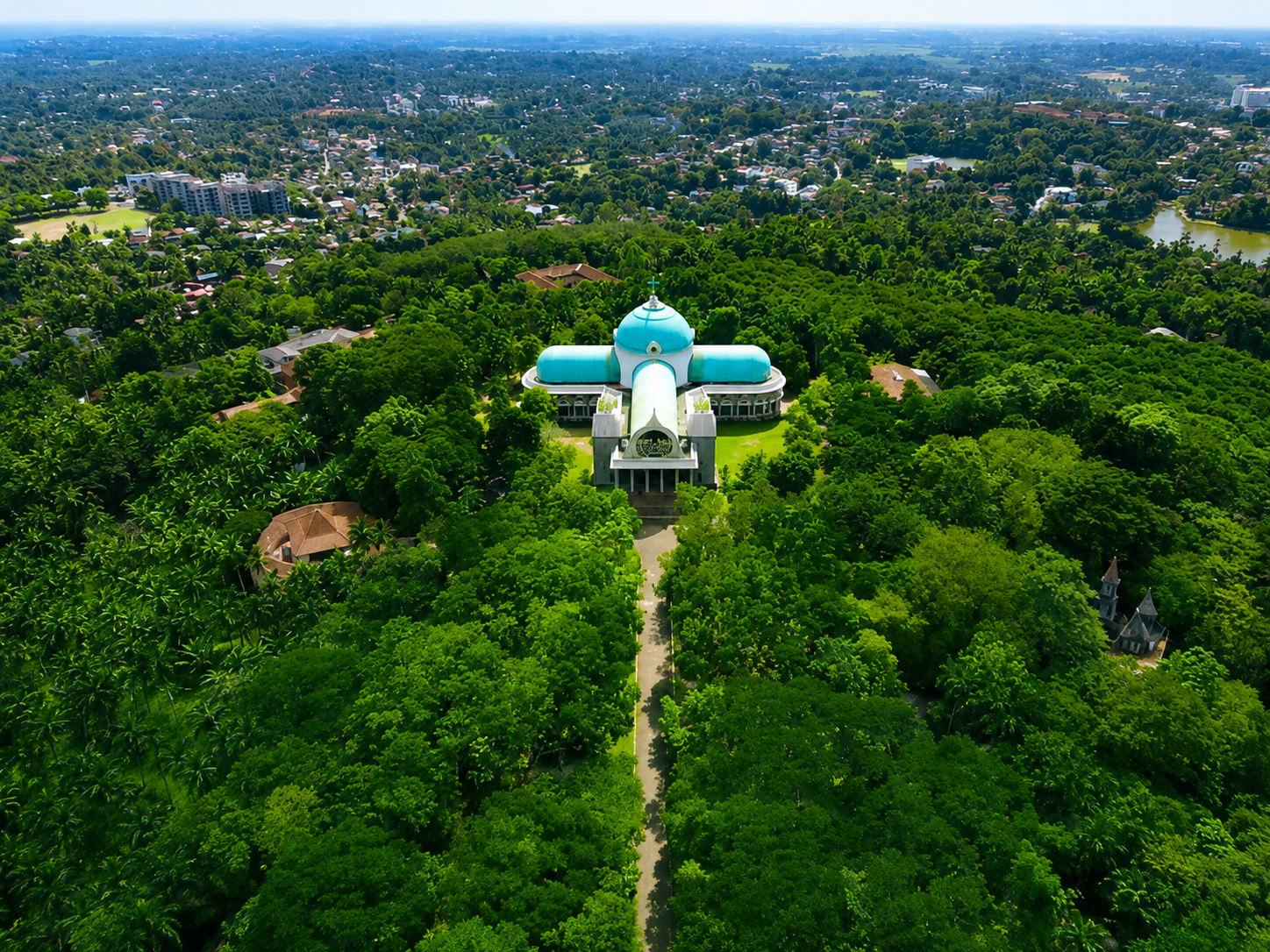
Large basilica with open pilgrimage grounds, an historic Marian shrine and beautiful woodland surroundings.
Historical timeline
- 1670Catholic refugees from Mannar bring the statue of Our Lady to Madhu.
- 1872Present shrine church consecrated.
- 1924Statue of Our Lady of Madhu solemnly crowned.
- 2015Pope Francis visits and prays at the shrine.
Cultural importance
One of South Asia's largest Marian pilgrimages, uniting Sri Lankans of every faith through decades of conflict and peace.
Visitor experience
Two annual festivals draw nearly a million pilgrims (2 July and 15 August). The forest setting is profoundly tranquil outside festival weeks; pilgrims collect Madhu sand believed to have healing properties.
Things to do
- ✦Attend Mass at the shrine
- ✦Collect blessed Madhu sand
- ✦Walk the Stations of the Cross through the forest
- ✦Visit the war-affected nearby villages
Visitor information
Interesting facts
- ✦More than 400 years of continuous Marian devotion.
- ✦One of South Asia's most important Catholic pilgrimage destinations.
- ✦Pilgrims from Buddhist, Hindu, Muslim, and Christian communities visit the shrine.
- ✦Served as a humanitarian refuge during Sri Lanka's civil war.
- ✦Visited by Pope Francis on 14 January 2015.
- ✦The Annual Feast of Our Lady of Madhu attracts hundreds of thousands of pilgrims each year.
- ✦Widely regarded as Sri Lanka's greatest symbol of peace and reconciliation.


